How to Do Uttanasana (Standing Forward Bend) | Complete Guide
The Origin and Meaning of Uttanasana
Uttana = intense stretch, extend or lengthen out
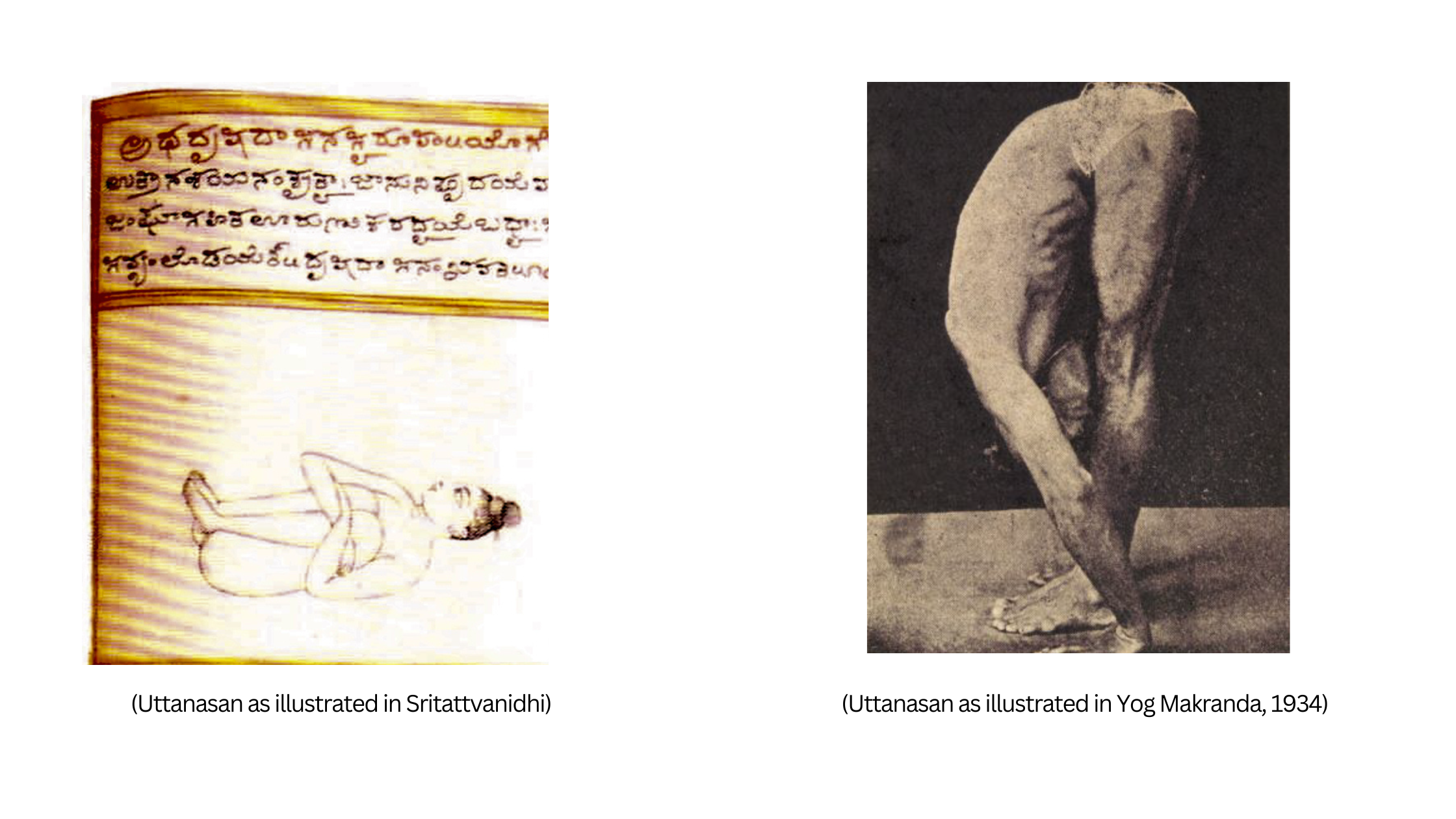
The pose is a modern one, first seen in the 20th century. Uttanasana was first illustrated in the 19th century Sritattvanidhi but it is quite different from the modern pose (lying on the back, with elbows touching the knees and the hands behind the neck).The modern pose is described in Krishnamacharya's 1934 Yoga Makaranda and in the works of his pupils, B. K. S. Iyengar's 1966 Light on Yoga and Pattabhi Jois's Ashtanga Vinyasa Yoga.
Students & Teachers Hear this First!
Before learning how to do Uttanasana (Standing Forward Fold), it is important to understand why you are practicing the pose.
Many beginners believe the goal of Uttanasana is to touch the head to the knees or the hands to the floor. In reality, that is not the purpose of the posture.
The intention of Uttanasana is to create a deep, mindful stretch through the posterior chain—primarily the calves, hamstrings, gluteal muscles, spinal muscles, and surrounding connective tissues. These muscles often become tight because of prolonged sitting, inactivity, and modern lifestyles.
When we chase external achievements, we tend to force the body and allow the ego to take over. Yoga invites us to do the opposite. Instead of comparing ourselves with others, we learn to observe our own body, breathe consciously, and move within our present capacity.
When the intention is correct, the posture naturally becomes safer, more effective, and more rewarding.
How to do Uttanasana (Standing Forward Fold Pose)
Phase 1: The Setup
Establish Your Base: Begin by standing in Tadasana (Mountain Pose), with your feet hip-width apart or together. If a full forward fold feels restrictive early on, separate your feet slightly wider to create more space for your torso.
Activate the Legs: Ground down evenly through all four corners of both feet. Gently press the front of your thighs toward the back of your thighs to engage your quadriceps, being mindful not to lock your knee joints.
Lengthen Upward: Inhale deeply and raise your arms overhead into Urdhva Hastasana (Upward Salute). Roll your upper arms slightly outward, broaden across your collarbones, and gently lift your sternum by moving the upper back (dorsal spine) into the chest.
Phase 2: The Descent
Hinge from the Hips: Keeping your spine completely long, exhale and begin to hinge directly from the hip joints rather than rounding forward from the lower back.
Focus on Movement: Continue folding forward with control, maintaining as much length in the front of your torso as possible to keep the spine from collapsing.
Meet the Ground: Place your hands on the floor slightly in front of your feet. If the floor feels too far away, bend your knees as much as needed to bring the hands into solid contact with the mat or yoga blocks.
Phase 3: Deepening & Exit
Refine Hand Placement: Once your hands are grounded, you may gradually walk them back until they are directly beside your feet or clasp the back of your ankles, depending on your current flexibility.
Surrender to Gravity: Exhale completely, relax your neck entirely to let the head hang heavy, and allow your torso to move closer to your thighs without aggressively forcing the stretch.
Hold and Breathe: Stay here for a few deep breaths. Keep your leg muscles active and ensure your body weight is distributed evenly between the front and back of your feet.
Exit Safely: To come out, place your hands on your shins or hips, lengthen your spine with a deep inhale, and rise back up by hinging from the hips. Alternatively, if your back is tired or sensitive, bend your knees and slowly roll up one vertebra at a time.
Common Problem in Uttanasana
#1 One of the most common mistakes in Uttanasana is rounding or excessively arching the upper back. This usually happens because the hamstrings are tight.
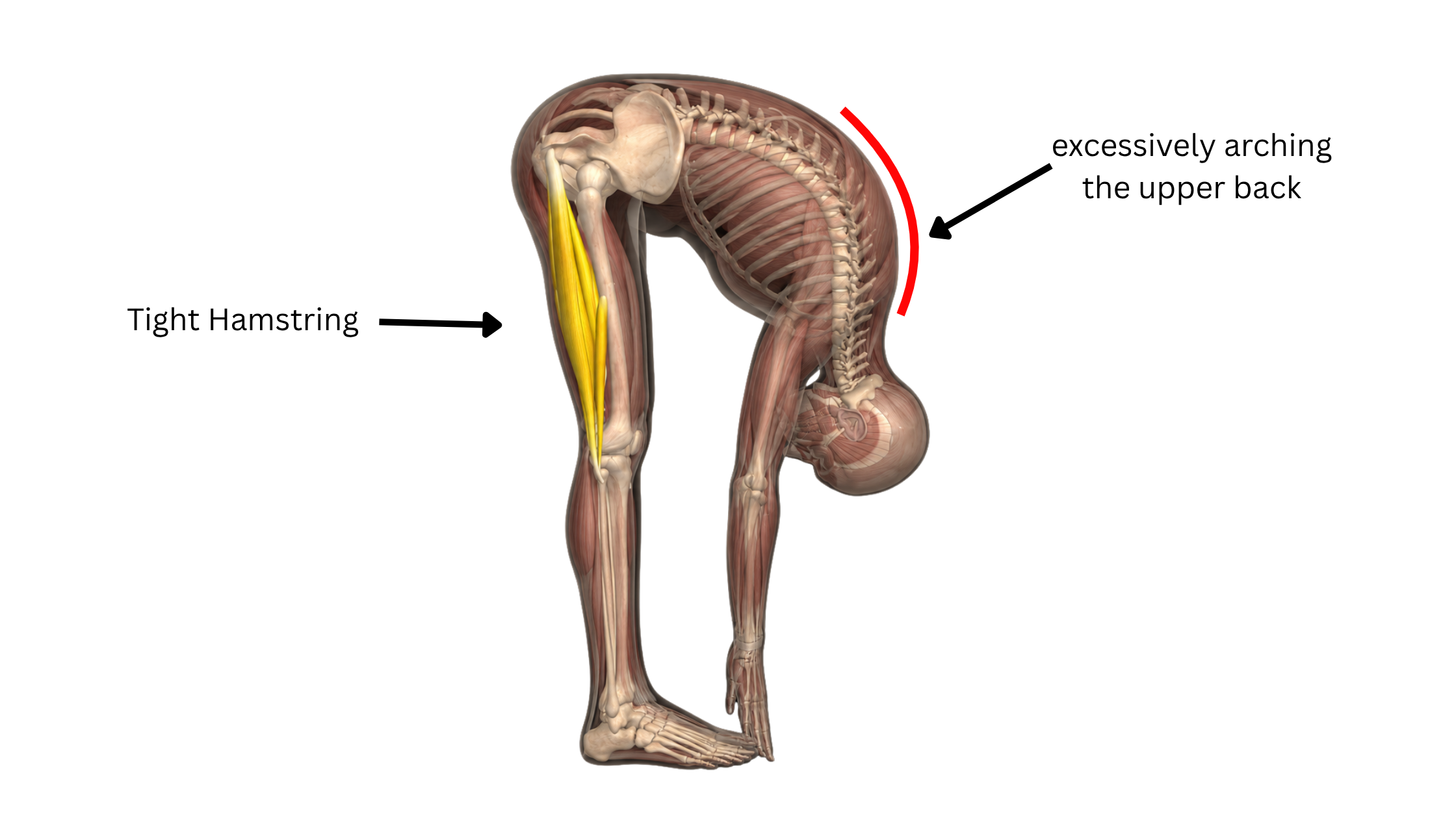
When the hamstrings lack flexibility, they resist hip flexion and pull the pelvis into posterior pelvic tilt. As a result, the pelvis cannot rotate forward sufficiently over the femurs. Since the hips have reached their available range of motion, the body compensates by increasing movement through the spine, causing the upper and lower back to round instead of folding from the hips.
Solutions
Before forcing a deeper forward bend, improve the movement strategy:
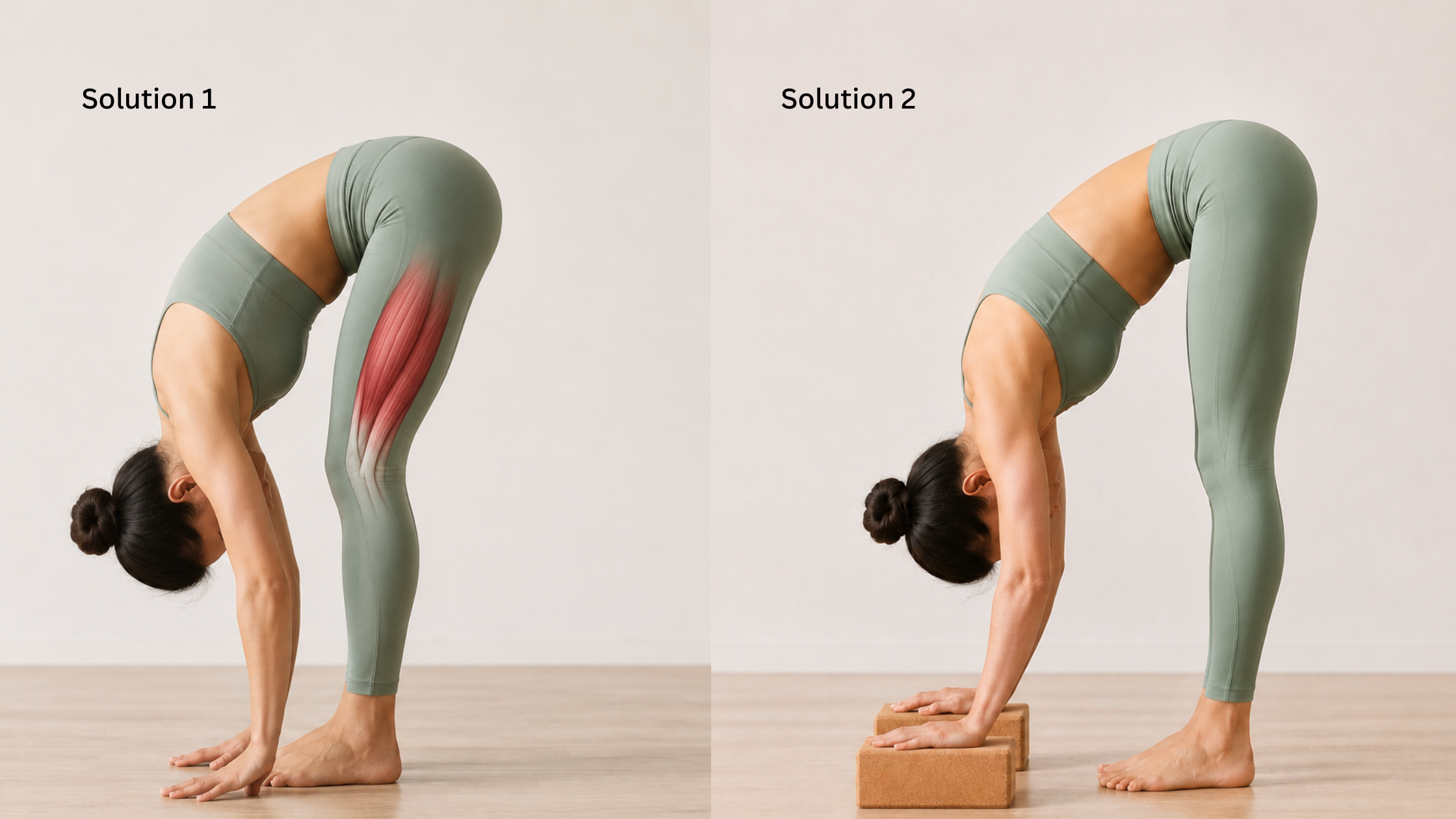
Slightly bend the knees to reduce tension in the hamstrings.
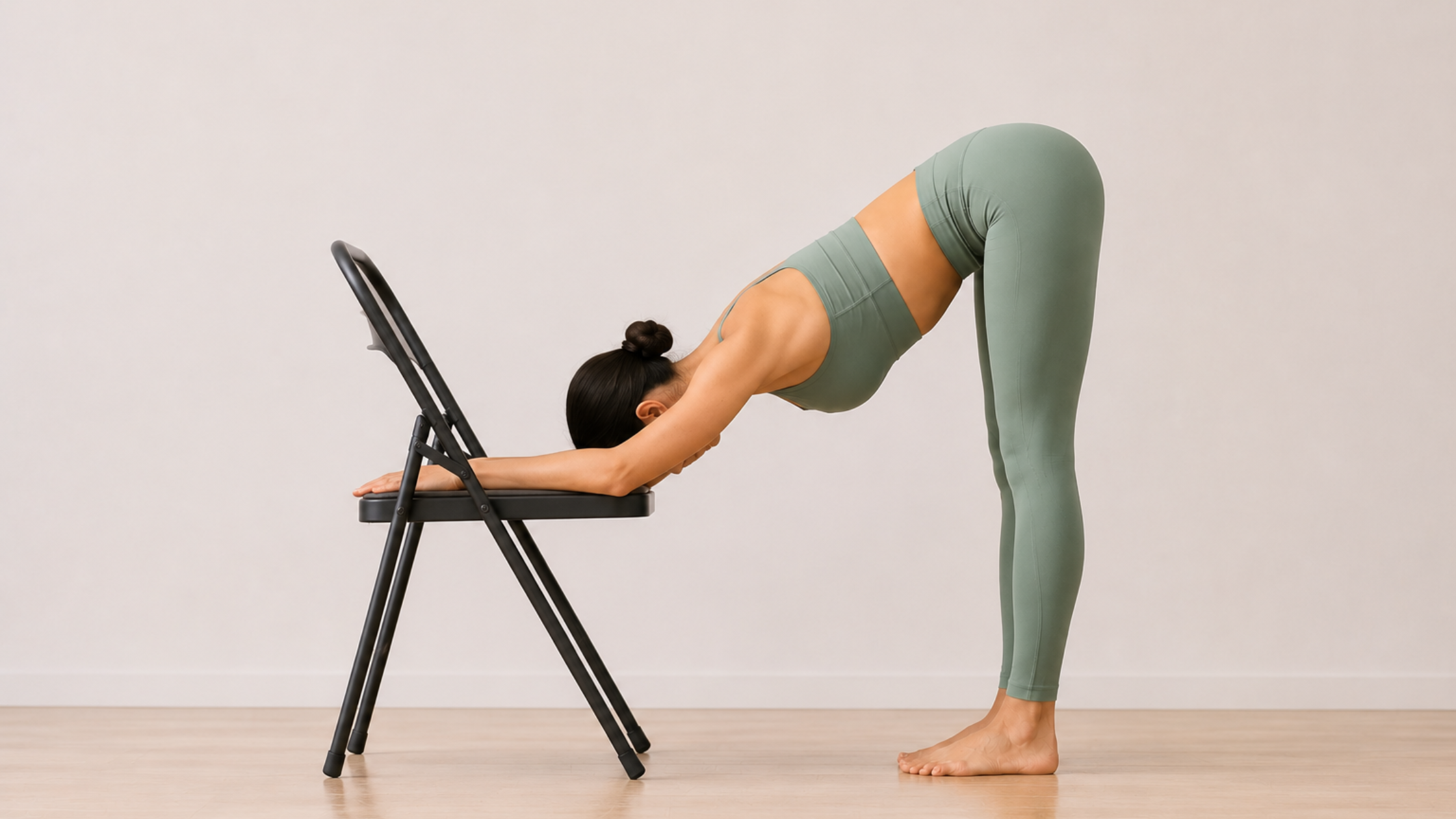
Place the hands on an elevated surface, such as blocks or a chair, to decrease the depth of the fold.
Regularly perform preparatory exercises to improve hamstring flexibility.
Anatomy of Uttanasana
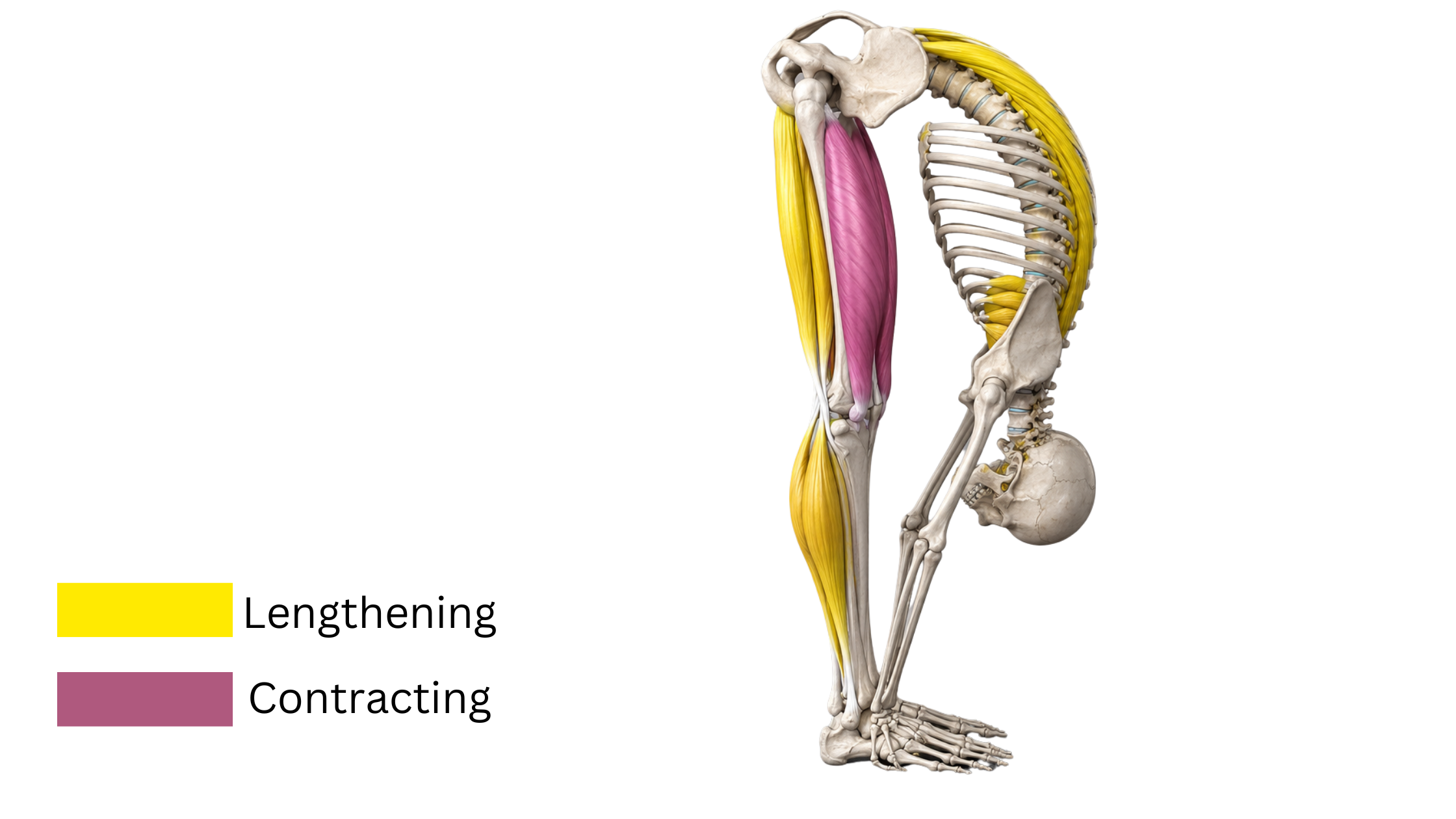
Uttanasana (Standing Forward Fold) is much more than a hamstring stretch. It is a full-body movement that requires coordinated action between the hips, pelvis, spine, knees, and ankles.
The forward fold should ideally begin with hip flexion, allowing the pelvis to rotate forward. When the hips move freely, the torso can descend with minimal rounding of the spine, creating a safer and more efficient stretch.
However, if the hips lack mobility—often due to tight hamstrings—the pelvis cannot tilt forward adequately. The body then compensates by increasing spinal flexion, placing greater stress on the muscles of the back instead of distributing the movement evenly.
Should You Bend Your Knees?
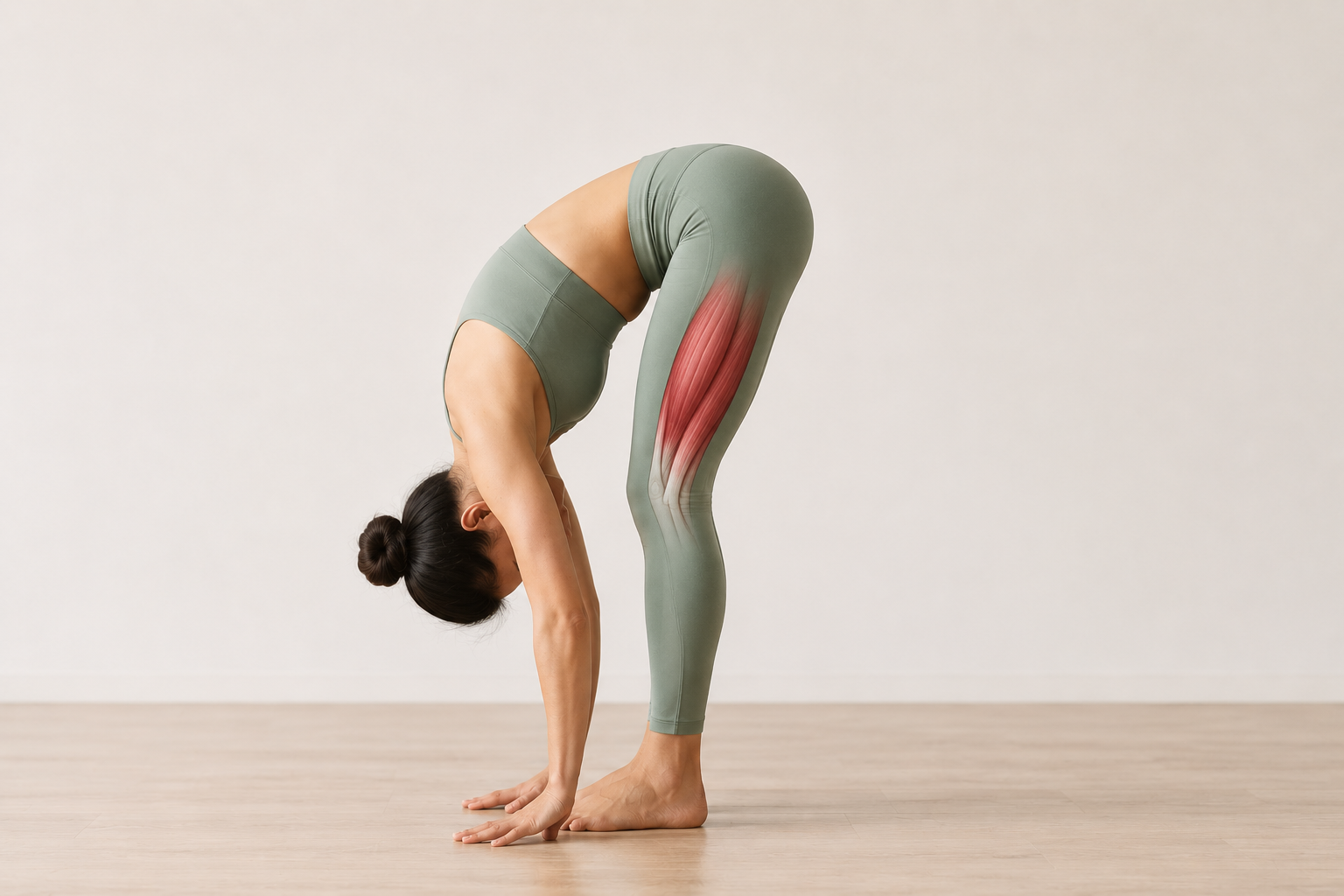
If your hamstrings feel tight, slightly bending the knees is often the better choice. A small knee bend can:
Reduce tension in the hamstrings
Allow the pelvis to tilt forward more easily
Decrease strain on the lower back
Help maintain a longer, more comfortable spine
As flexibility improves and the spine remains relaxed, the knees can gradually be straightened without forcing the posture. The goal is not to keep the legs perfectly straight but to create an efficient movement pattern through the entire posterior chain.
Teaching Tip
Rather than trying to touch the floor, encourage students to:
Initiate the fold from the hip joints.
Keep the front of the hips soft instead of pulling themselves down.
Let gravity deepen the pose naturally.
Slightly bend the knees if the hamstrings restrict pelvic movement.
Gradually work toward straighter legs only after the spine can comfortably lengthen.
This approach creates a more balanced stretch throughout the entire posterior chain—from the calves and hamstrings to the gluteal muscles and the muscles along the back.
As you practice Uttanasana, remember that the most important aspect of the posture is your intention. The goal is not to force your head to your knees or your hands to the floor. Instead, the purpose is to create a mindful, controlled lengthening of the posterior chain while moving with awareness and respecting your body's current range of motion.
When we become attached to achieving the deepest forward fold, the ego often takes over, encouraging us to push beyond our limits and compensate with poor movement patterns. Yoga invites us to shift our focus away from external achievements and toward the quality of our movement, the steadiness of our breath, and the awareness we cultivate in each moment.
Practice Uttanasana with patience rather than force. As your mobility, strength, and body awareness improve over time, the depth of the posture will develop naturally. In yoga, how you move is always more important than how far you move.
Frequently Asked Question


